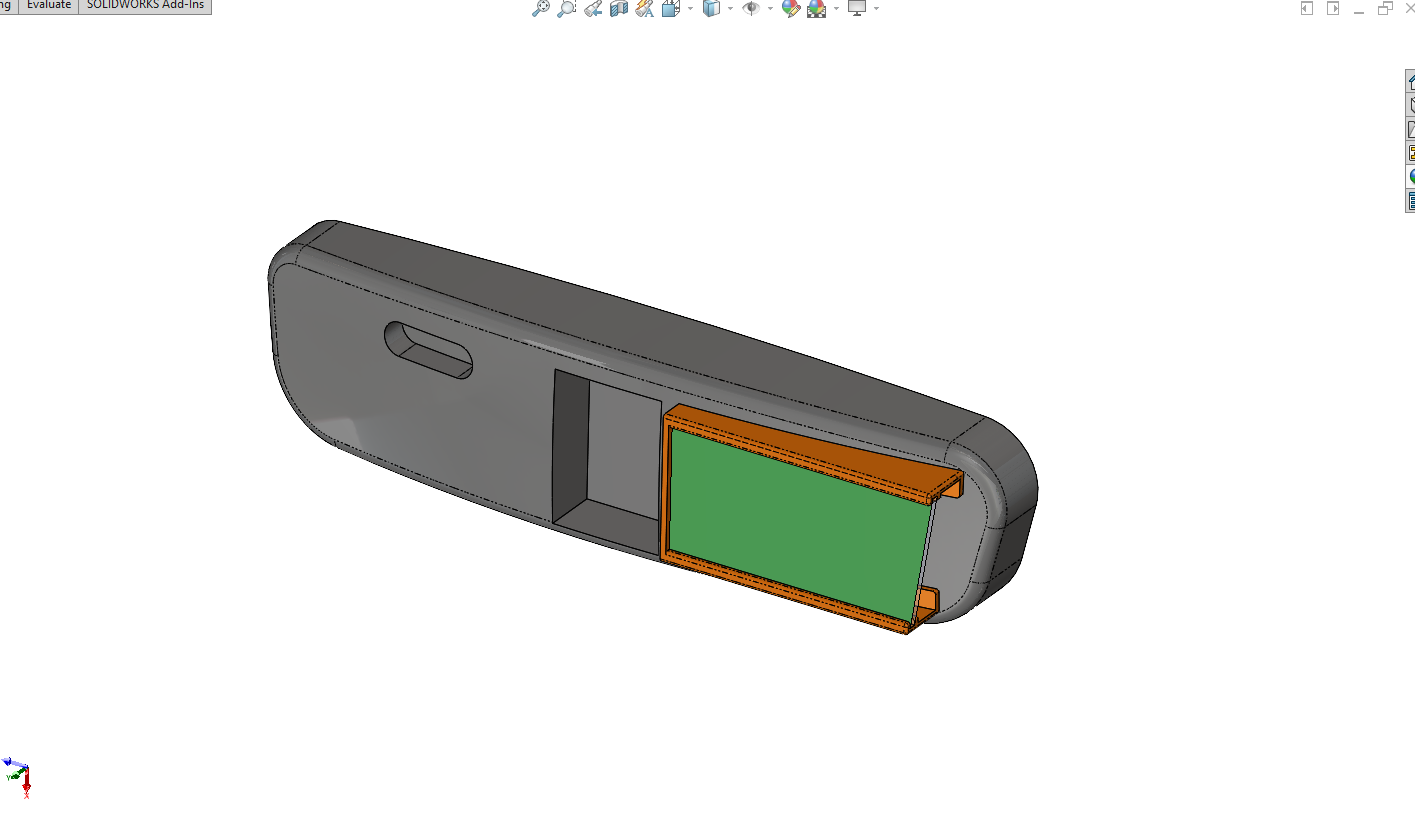
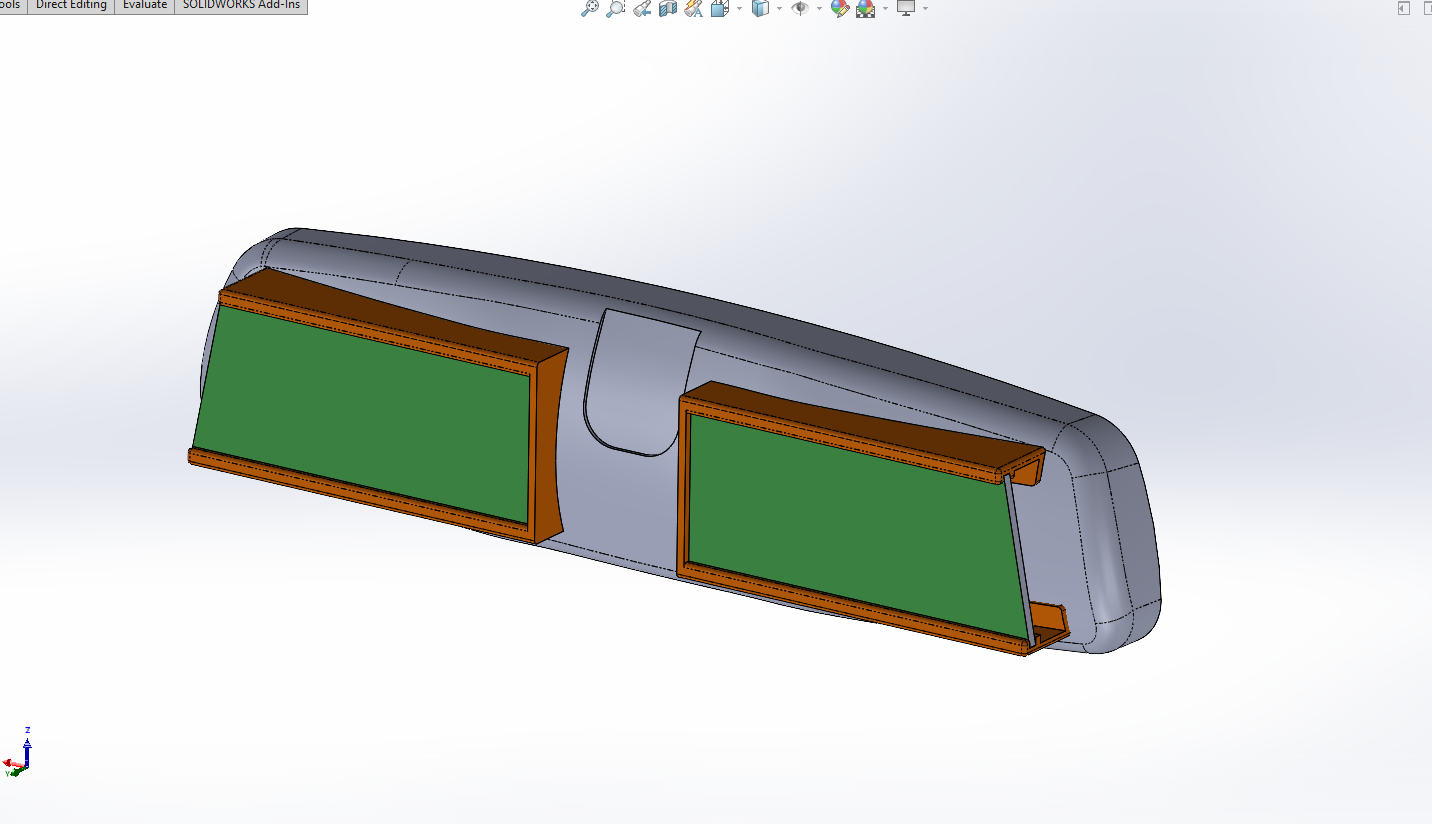
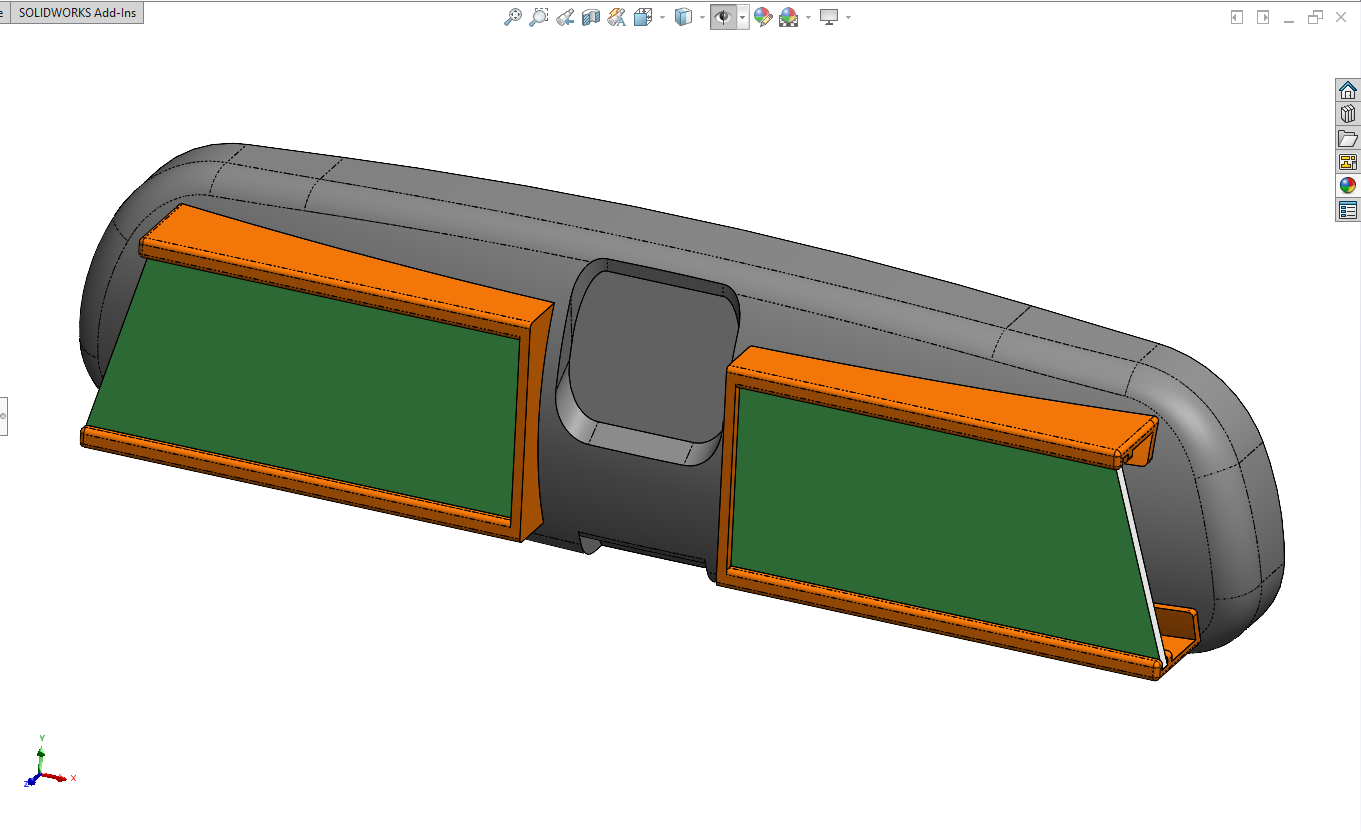
Rear-View Mirror Air-Freshener Clip (Scan-to-Fit)
Industry:
Automotive Accessories · Consumer Products
Role & Scope:
PRODUCT DESIGN · CAD ENGINEERING · REVERSE ENGINEERING · PROTOTYPING
Tools & Methods:
SolidWorks · 3D scan processing (mesh → solid) · FDM-oriented design · ABS prototyping · Iterative fit testing
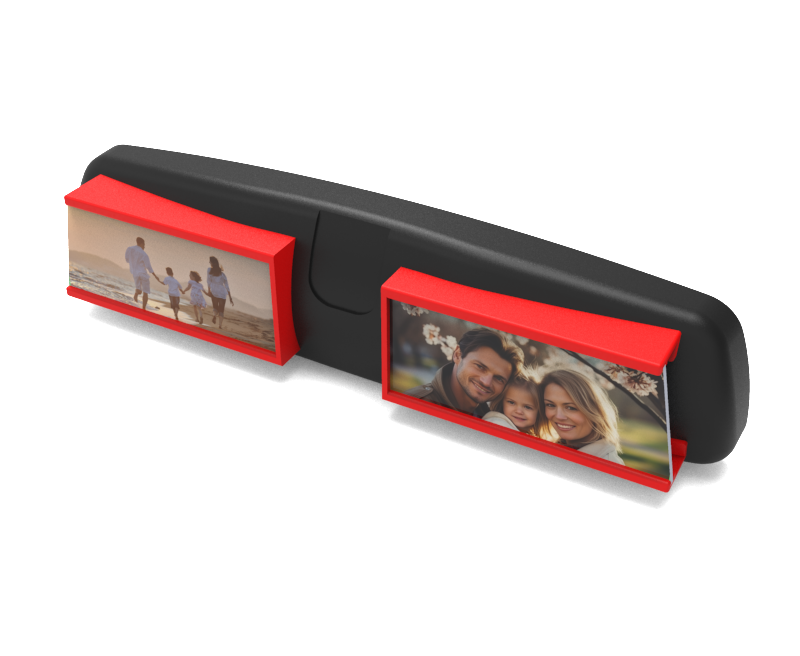
Focused clip design aligning scan data with functional fit for 3D-printed prototypes.
Key features:
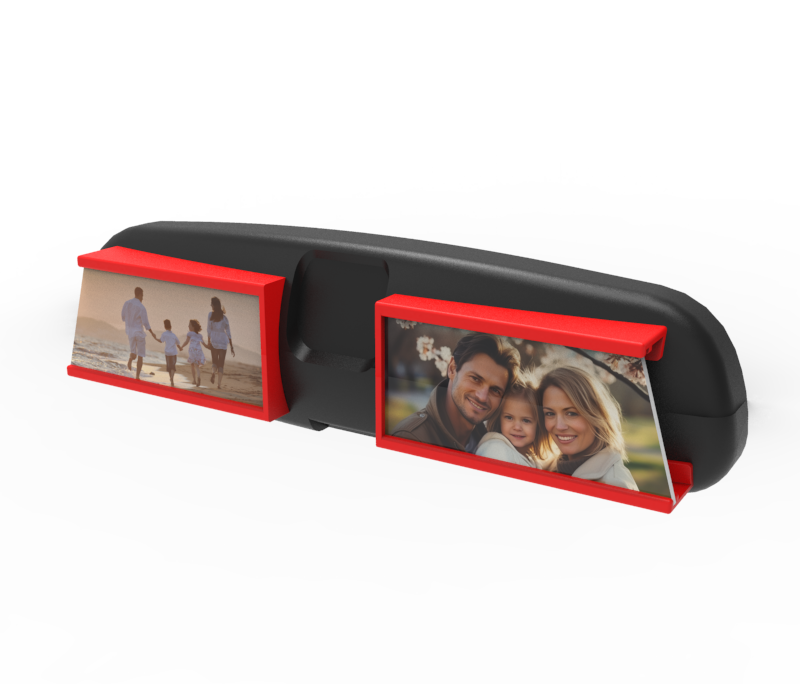
- Hidden mounting behind the rear-view mirror
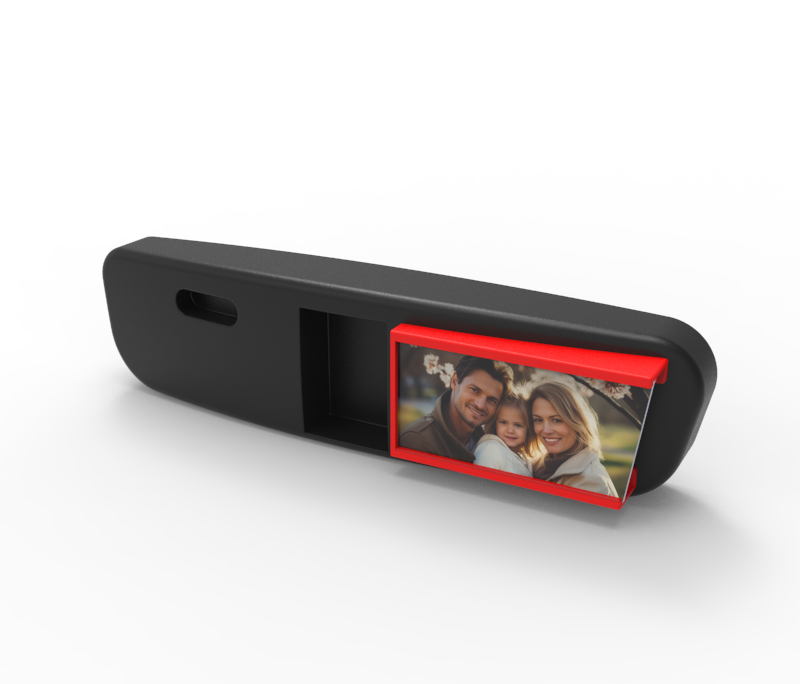
- Flat sliding slot for 2.5 mm air-freshener blanks
- Curvature-matched base derived from real 3D mirror scans
- Double-sided tape interface with controlled protrusion for reliable adhesion
- Left and right mirrored clip variants
- Optimized geometry for ABS FDM printing and rapid testing
The Challenge:
- The key engineering challenge was to match complex mirror curvature and mounting constraints while keeping the visible freshener flat and hidden.
- The clip had to follow complex mirror curvature while keeping the air-freshener slot perfectly flat
- Limited mounting space and strict visibility constraints from the driver’s seat
- Adhesive mounting required careful control of contact area, tape thickness, and stiffness
- Multiple mirror models required a repeatable scan-to-design workflow
- Designs had to be printable, testable, and iterated quickly
Key constraints:
- Complex mirror curvature with limited mounting space
- No visibility from the driver’s seat
- Adhesive-only mounting (no fasteners)
- Flat air-freshener insertion despite curved base
- Need for left/right mirrored variants
Outcome:
- Functional clip design validated through physical ABS prototypes
- Clean sliding action with flat air-freshener alignment
- Secure adhesion without visible hardware
- Scalable workflow established for adapting the design to additional mirror geometries
- CAD files delivered ready for continued iteration and production planning
- This clip design can now be adapted quickly for additional mirror geometries with minimal rework, establishing a scalable design process for future variants.
What this project demonstrates:
- Scan-to-CAD reverse engineering for consumer products
- Designing to real-world constraints, not ideal geometry
- Mechanical judgment around adhesion, stiffness, and tolerances
- Practical DFM for FDM prototyping
- Clear, fast collaboration with non-technical founders
Process & Key decisions:
Scan-Driven Reverse Engineering
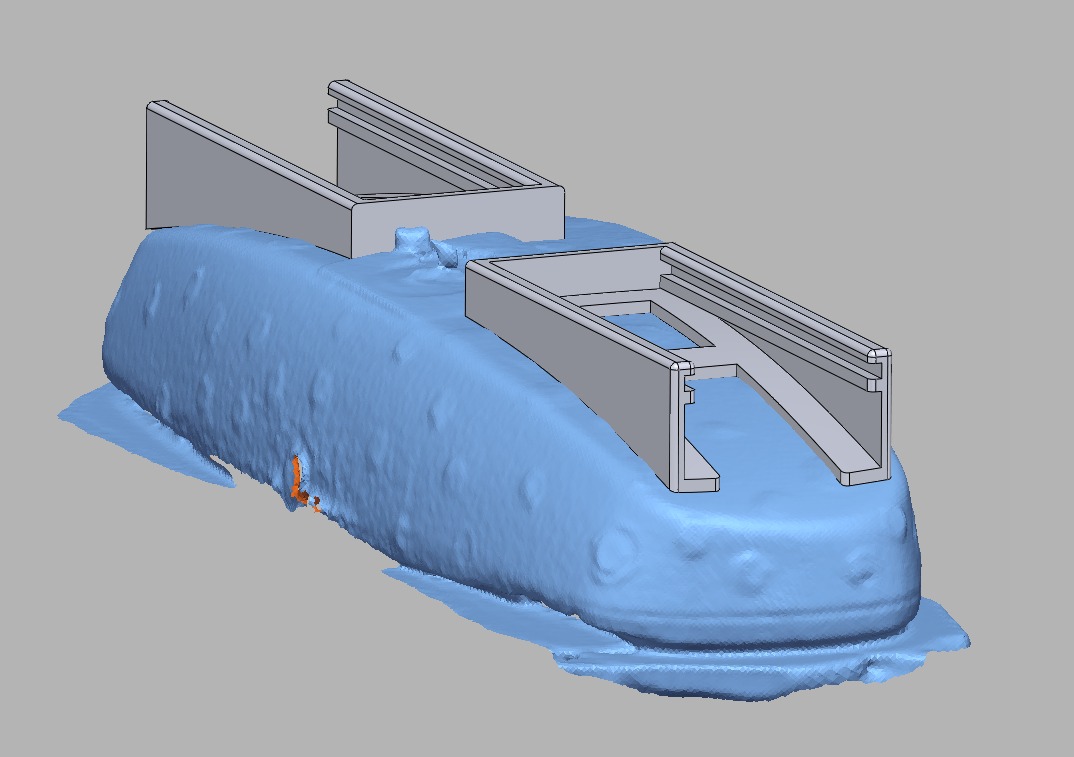
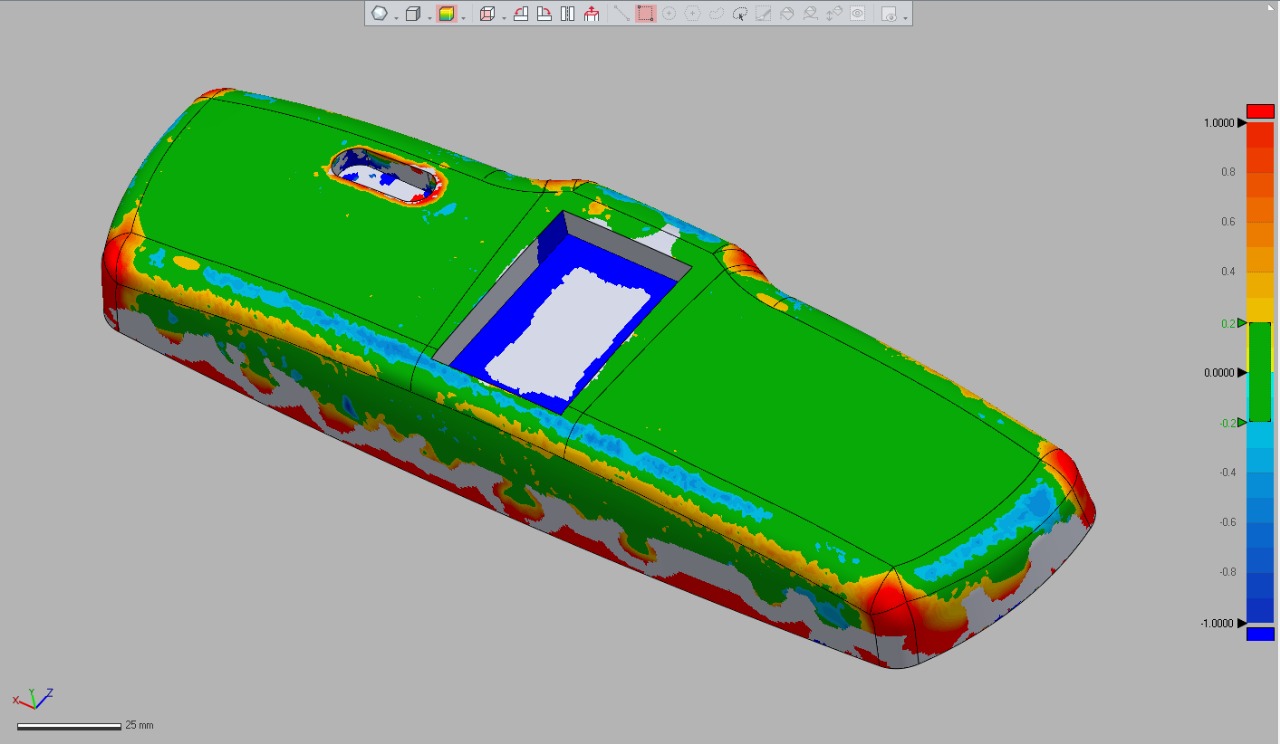
3D scans of rear-view mirrors were cleaned and aligned to establish accurate reference geometry.
Key surfaces and edges were reconstructed into parametric solids to define reliable mounting boundaries.
Curvature-Matched Base Design
The clip base was shaped to follow the mirror curvature while maintaining a fixed offset (~6 mm) so the air-freshener could slide in straight without bending.
Adhesive Interface Optimization
A dedicated groove was designed for double-sided tape:
- Shallow depth to allow tape protrusion
- Sufficient surface area for long-term adhesion
- Reinforcement where peel forces are highest
Left / Right Variant Strategy
Asymmetrical geometry required true mirrored parts instead of a single universal clip, ensuring consistent fit on both sides of the mirror mount.
Iterative Prototyping
Designs were printed, tested, adjusted, and re-released in short cycles based on real-world fit feedback, reducing risk before scaling to additional mirror models.
CAD Development & Engineering Proof: